Understanding the Structure and Feature of Companies


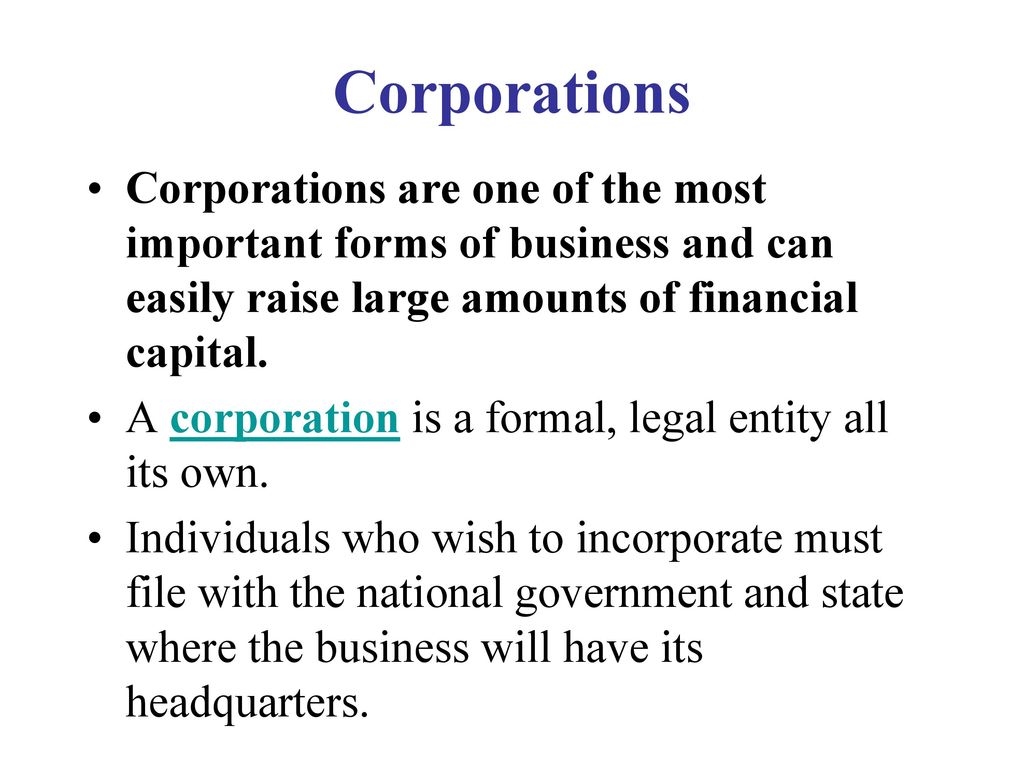
Corporations are basic entities within the worldwide economic situation, serving as the foundation for markets across different industries. A corporation is a lawful entity separate from its owners, with the ability of having assets, sustaining obligations, employing staff members, getting in agreements, and paying tax obligations. This distinctive legal standing provides shareholders with limited liability, indicating their individual assets are protected from the firm's financial debts and lawsuits. The production of a corporation entails a regulatory structure that differs by jurisdiction however normally includes registering with a government body, preparing legal papers like short articles of consolidation, and adhering to ongoing compliance responsibilities.
The administration of a corporation is generally structured around a board of supervisors, accountable for managing the entity's strategic direction and making substantial plan choices. Investors, the proprietors of the company, deserve to elect these directors and elect on major issues at yearly meetings. The day-to-day operations are managed by executives and policemans that manage different useful domain names such as financing, operations, and marketing. This hierarchical structure assists in distributing duties and aligning the company's tasks with its tactical goals. Companies can release supplies to elevate funding from financiers, a critical facet that sustains growth and operational tasks. Hence, recognizing the detailed information of how firms are and function structured is vital for realizing their duty in the modern-day economic climate.
Review of Corporate Entities and Their Features
Corporations are intricate entities that function as the backbone of the contemporary economic situation, working under lawful structures that provide them certain civil liberties, duties, and obligations distinctive from those of individuals. Basically, a company is a lawful entity created under state legislation, normally for the purpose of carrying out company. Corporations can possess home, participate in binding agreements, sue and be sued, and execute many various other activities with police officers or agents that act on their behalf. One of the key benefits of a corporation is restricted obligation, a stipulation that safeguards shareholders' individual properties from being made use of to please corporate debts or liabilities. This lawful separation in between the company's commitments and the individual financial resources of its investors urges individuals to buy businesses without running the risk of individual economic destroy. Firms are likewise identified by their capability to elevate resources efficiently, either through the sale of stock or via financial obligation funding. This ability not just sustains expansion and the growth of brand-new products yet likewise provides a system for the threat to be spread amongst a big team of shareholders. Moreover, the presence of a firm can proceed indefinitely, going beyond the lives of its owners and any monitoring modifications, which permits long-lasting planning and financial investments. Governance in corporations commonly entails an organized board of supervisors accountable for making major decisions and looking after the general procedures of the firm. This board delegates everyday management to executives who deal with the functional elements of the business. The circulation of these functions and duties is normally detailed in company laws, which are prepared at the corporation's beginning and can be changed as required to accommodate the organization's evolving demands. On the whole, companies play an indispensable role in thrusting economic situations onward by promoting advancement, giving employment, and assisting in the manufacturing and circulation of products and solutions around the world.
Company Framework and Governance
Recognizing the intricacies of corporate structure and governance is crucial for understanding just how a company operates and is handled. At the core of any type of firm's framework are the investors, who own shares in the company and thereby a portion of its profits and assets. These shareholders elect a board of supervisors, a crucial body that makes overarching choices and sets plans intended to boost the profitability and feasibility of the firm. The board of directors designates the business's senior monitoring, consisting of the President (CHIEF EXECUTIVE OFFICER), who is in charge of the day-to-day procedures and administration of the corporation. This ordered framework guarantees that there is a clear delineation of responsibilities and duties, which is critical for huge companies where calculated alignment and operational performance are vital. Company administration incorporates the techniques, rules, and procedures by which a company is routed and managed. It stabilizes the rate of interests of the various stakeholders-- including shareholders, monitoring, clients, providers, sponsors, government, and the community. Efficient administration involves regulatory conformity, honest conduct and keeping a transparent partnership with stakeholders. It aims to build a framework that promotes educated decision-making, liability, and the liable management of sources, which eventually adds to the long-lasting sustainability of the firm. This framework is additionally vibrant, frequently progressing with changes in law, societal assumptions, and organization settings, ensuring that the company stays straightened with both its inner objectives and external responsibilities.
Corporate Structure and Administration
Recognizing the complexities of business structure and governance is essential for grasping just how modern corporations operate and are managed. At its core, the company framework establishes the pecking order and the distribution of obligations within a company. This framework is usually marked right into 3 key rates: officers, supervisors, and shareholders. Shareholders are the proprietors of the firm, and they exert their power mostly through voting to elect the board of supervisors. The board holds significant authority over corporate plans and strategic choices and is in charge of overseeing the total monitoring of the company. Policemans, including the Chief Exec Policeman (CEO), Chief Financial Police Officer (CFO), and others, are selected by the board to handle the daily procedures and to carry out the board's methods and policies. On another level, business administration refers to the mechanisms, procedures, and relations by which companies are controlled and directed. Administration frameworks and principles identify the distribution of rights and responsibilities amongst different individuals in the corporation, such as the board, managers, shareholders, and various other stakeholders, and include the policies and procedures for choosing on company affairs. Great administration can result in enhanced firm performance by mitigating threat and including transparency to decisions, which can bring in financiers and boost the firm's track record. Alternatively, bad governance can result in monetary scandals and crises that jeopardize investor self-confidence and company viability. Therefore, the effectiveness of administration impacts not only the corporation however additionally the economy at huge by influencing just how sources are alloted and how organization risks are managed. Corporate administration structures can vary significantly depending upon the lawful and governing landscape of the country in which a firm operates. For instance, in the USA, public corporations are expected to follow stringent Stocks and Exchange Payment (SEC) guidelines that impose openness and liability. On the other hand, a family-owned business might not go through such strenuous regulatory oversight however will still stick to inner administration concepts tailored to its one-of-a-kind circumstance. This versatility permits each corporation to adjust its administration framework to fulfill certain operational requirements, business objectives, and regulative needs, thereby boosting its capacity to handle interior and external difficulties properly.
Strategic Growth and Investment Approaches of Modern Corporations
In today's quickly advancing market, corporations are progressively concentrating on cutting-edge approaches for growth and investment to solidify their market placements and make sure lasting growth. The strategy to strategic growth typically entails a mix of scaling up operations, expanding product lines, getting in brand-new markets, and leveraging modern technology to improve efficiency and reach. For circumstances, technology titans are continuously discovering opportunities in expert system and artificial intelligence to drive both their core products and brand-new endeavors. This not only strengthens their technological side however likewise opens brand-new revenue streams. Likewise, manufacturing firms spend greatly in automation and smart innovations to increase manufacturing capabilities and decrease operational prices, aligning with the wider goals of industrial sustainability and performance. Modern companies are not simply broadening via natural development; mergings and procurements (M&A) are significantly prominent as a quicker path to growth. By combining or acquiring with various other companies, services can swiftly scale, obtain new modern technologies, or remove competitors, therefore improving their market share and economic stability. For instance, the tech market saw significant M&An activity as companies aimed to consolidate their services and broaden their technical abilities. Beyond innovation, we see comparable trends in the pharmaceutical sector where firms aim to improve their R&D capacities and expand their market reach by obtaining biotech startups. One more vital facet of company approach today is the emphasis on sustainability and social duty. Financiers and consumers alike are increasingly requiring that firms not only concentrate on productivity yet likewise on their impact on society and the setting. This change has motivated firms to reassess their functional, financial investment, and growth methods to include lasting techniques. Whether it's via seeking eco-friendly power solutions, reducing waste, or making sure fair labor practices, integrating these aspects right into core organization approaches has ended up being essential for preserving a favorable public photo and safeguarding capitalist confidence. Financial investment in digital makeover has likewise become a keystone of company approach. With the rise of electronic industries, on-line services, and remote work modern technologies, firms across all sectors are discovering that digital readiness is vital to competitiveness. how to do a trademark search for free has actually stimulated considerable investment in electronic facilities, cybersecurity, and shopping capacities, guaranteeing that firms not just make it through however prosper in the electronic age. In final thought, the strategic growth and investment approaches of modern firms are complex, reflecting the complexities of the worldwide market. By embracing technical innovation, seeking purchases and mergers, devoting to sustainability, and investing in digital makeover, business are placing themselves for sustainable development and continued significance in their respective sectors.